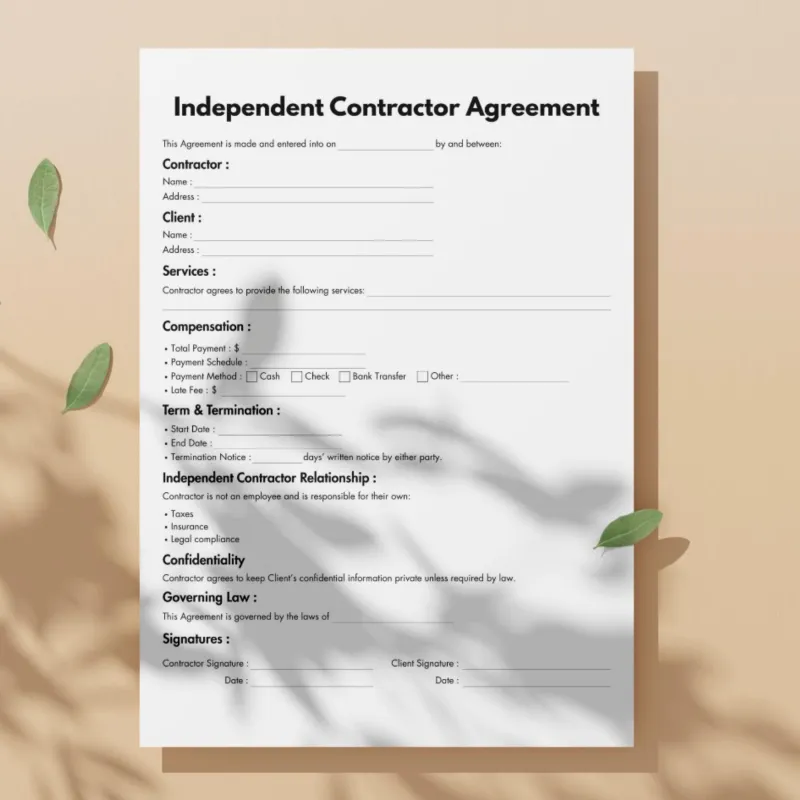
The Long Goodbye: Why Your Vendor's Departure Didn't End Your Obligations
Photo: Internet Archive Book Images, No restrictions, via Wikimedia Commons
When Meridian Components terminated its logistics vendor in March 2022, the internal announcement described the transition as "complete." The vendor's badges were deactivated, the final invoice was paid, and the account was closed. What no one at Meridian flagged — because no one was looking — was that the underlying master services agreement contained a six-year indemnity obligation, a confidentiality provision with no expiration date, and an audit right the company had never once exercised.
Three years later, when a data incident at the vendor's successor company drew Meridian into a dispute, those dormant provisions suddenly became the most important documents in the file. The relationship had ended. The obligations had not.
The Myth of the Clean Break
Executives tend to think of contracts as living documents while the relationship is active and as closed files once it ends. This is an understandable instinct — it mirrors how most business relationships actually feel. But American contract law does not operate on sentiment. Unless a provision states otherwise, obligations that survive termination remain fully enforceable long after the last purchase order has been processed.
Certain provisions are notorious survivors:
- Indemnification. Many indemnities expressly survive termination for a defined period — commonly two to six years — and some survive indefinitely for specified claims.
- Confidentiality and non-disclosure. These frequently run three to five years post-termination, and trade secret protections can persist far longer.
- Non-solicitation and restrictive covenants. Their enforceability and duration vary by state, but the obligations themselves often continue for one to two years after separation.
- Audit and record-keeping rights. Companies routinely forget they may still be entitled to inspect a former vendor's records — and equally forget they may still be obligated to maintain their own.
- Insurance requirements. Some agreements require tail coverage or certificates of insurance that must be renewed after the contract ends.
The common thread is that none of these obligations announce themselves. They sit in a signed document in a shared drive, waiting.
A Hypothetical Audit: What Meridian Should Have Done
Consider how a disciplined post-termination review would have worked for Meridian. Within thirty days of the transition, a small team — ideally including counsel, procurement, and IT — would have pulled the executed agreement and every amendment, then answered four questions for each provision.
First: does this obligation survive? The survival clause itself is only a starting point. Many agreements list certain provisions as surviving, but courts may enforce other provisions post-termination when the language and purpose support it. Read the whole document, not just the survival section.
Second: until when? Some provisions carry fixed sunset dates; others are indefinite. Both demand attention, but for different reasons. A dated indemnity needs a calendar entry. An open-ended confidentiality duty needs a policy — because the obligation will outlast the employees who remember it.
Third: who owns it now? The individuals who negotiated the contract are frequently gone by the time the obligation matures. Assign each surviving duty to a role, not a person, and document the assignment.
Fourth: what would trigger it? An indemnity for data breaches requires knowing whether the vendor still holds your data. A non-solicit requires knowing which employees might be approached. Mapping the trigger events turns abstract obligations into manageable risks.
Building the Calendar That Catches Them
The practical remedy is unglamorous: a contractual obligations calendar maintained with the same rigor as a litigation docket. Effective systems share a few characteristics.
Single source of truth. Surviving obligations live in a central register — not in individual inboxes or a departed manager's memory. Each entry should identify the counterparty, the provision, the expiration date (or "indefinite"), the internal owner, and the triggering events.
Tiered review cycles. Not every surviving obligation deserves equal attention. High-exposure items — open-ended indemnities, active data custody, unexpired non-competes — warrant annual review. Lower-risk items can be revisited on a longer cycle. The point is deliberate allocation, not uniform frequency.
Exit-triggered intake. The best time to capture surviving obligations is at termination, while context is fresh. Build a standard exit checklist into the offboarding process for every vendor, customer, and partner relationship, so the register is populated before institutional knowledge walks out the door.
Periodic diligence of the other side. Where the agreement grants continuing audit rights, decide deliberately whether to exercise them. Where the counterparty has been acquired, dissolved, or renamed, update the record. An indemnity against an entity that no longer exists is worth exactly what you'd expect.
The Cultural Piece
Systems fail without sponsorship. The organizations that manage post-termination risk well treat contract closeout with the same seriousness as contract signing — a matter of professional discipline rather than administrative housekeeping. General counsel can reinforce this by reporting on the surviving-obligations register alongside more visible metrics, and by making contract exit reviews a standing agenda item in operational governance.
The warranty that outlived the product is not an anomaly; it is the ordinary condition of commercial contracting. The companies that avoid surprises are not the ones with fewer obligations. They are the ones that know exactly which clocks are still running — and who is responsible for listening for the alarm.